

The Setting
When visiting someplace new, I find myself pressing to quickly understand the personality. Tasmania, affectionately known as Tassie to most, is a tough one to pin down. As an island and Aus’s southernmost state, it has a reputation for being a bit behind the mainland. Part of this is historic, as 42% of all “convicts” sent to Australia ended up in Tasmania versus the mainland. At one point during colonization, the British crown just simply stopped responding to the Island’s governor for years (Boyce).
The same things that have kept Tassie isolated from the world have also done wonders to protect its wildlife and biodiversity. Ecotourism is a rapidly growing sector of the economy and the main reason we were drawn to visit in the first place. For an island roughly the size of South Carolina, Tasmania has a mix of rare animals and stunning microclimates (Alpine, Rainforest, Desert) that make for an intriguing combination.
The Destinations (So Far)
Launceston

Landing in Launceston, Tasmania’s Second Largest City, the personality placing only gets more difficult. The airport looks more like a scandanvian farm house than one built for a rural airport. Upon arrival, every passenger gets sniffed by a lovely spaniel who doubles as a biosecurity dog, checking every entrant for invasive plants and species. It says a lot about the Tassie way of life that the dogs are trained to sniff for unwelcome fruits and vegetables versus explosives. Instantly, I was impressed by how forward Tasmania seemed to be. Then, the wildness started to show. After the airport, we stopped at Woolworth’s Grocery Store where, to our surprise, we saw a circus of kids running around barefoot. Their dad looked reluctantly “shoed”, but unbothered by the shade of black on the bottom of his kids feet. After a 36-hour travel day and this whiplash of Launceston we ended Day #1 decidedly undecided on our first impressions.
Cradle Mountain National Park

Our first full day in Tassie took us to Cradle Mountain. Cradle Mountain is #1 on almost all Tassie travel guides and almost retains mythical status amongst natives from the 3 people I talked to about it. The mountain is located slightly left of center on the island that serves almost as a dividing line between the wilder Western side and the significantly more populated Eastern side. With its popularity, Cradle Mountain has made it required for visitors to park in a central lot and take their bus system to explore the park. Initially, I was resentful of this set-up because like a good red-blooded American boy, I think car = freedom and no car = no freedom. However, I couldn’t have been more pleasantly surprised with the park’s set-up. A ranger greeted us at the visitor center, and upon looking at our packs and general fitness, seemingly read our minds in recommending a slight variation, but albeit improvement, of a hike I’d spent a week researching on Alltrails. Before setting off, we cleaned our boots at the invasive species sanitizing station and then hit the trail.
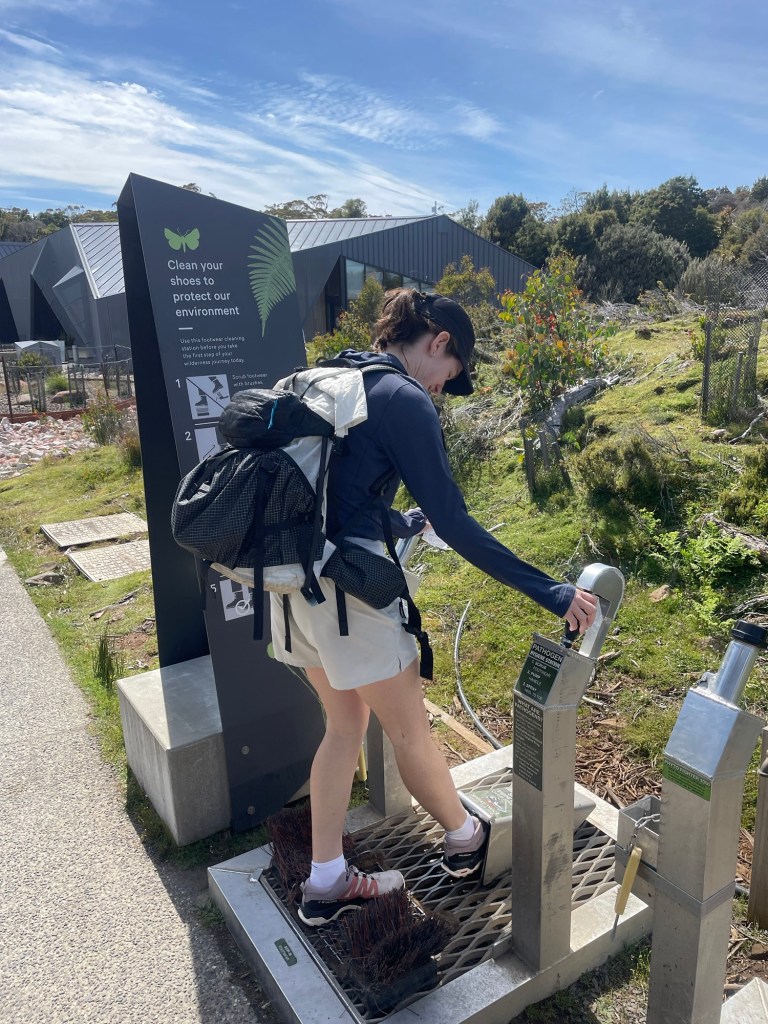
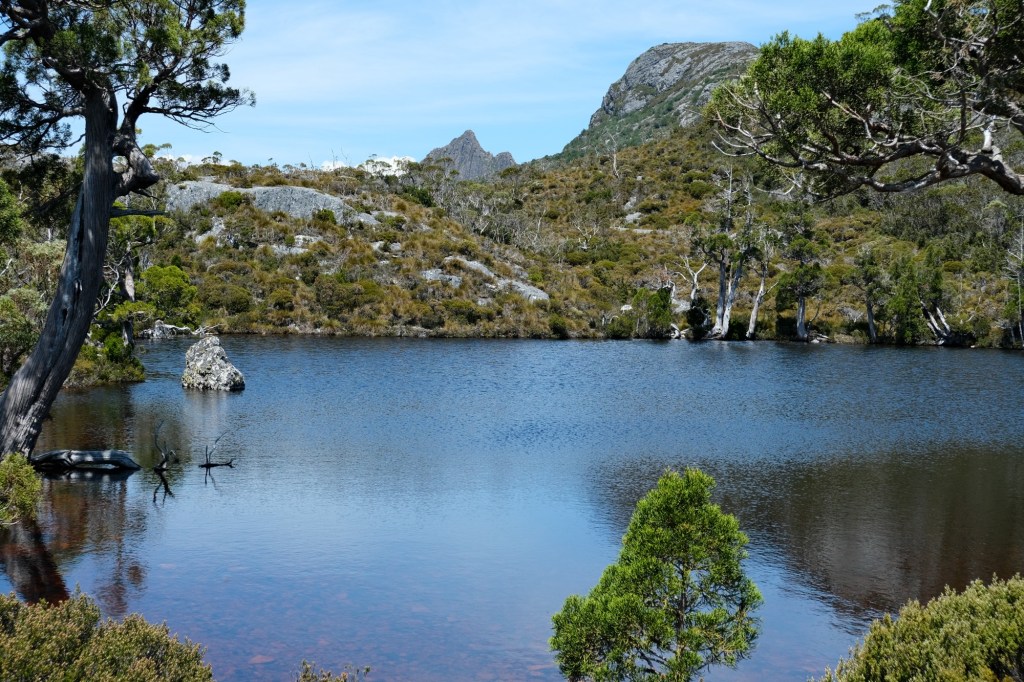
The trail winded its way through a mix of grassland, rainforest, and alpine terrain all in the span of four miles. The path seamlessly transitioned from elevated boardwalk to natural footing as the terrain shifted. I have a love-hate relationship with elevated trails because you feel distinctly removed from the landscape which you’ve come so far to be part of, but I can recognize the fragility of certain landscapes the park is trying to protect. Marion’s lookout was a distinct highlight and stunning view as we watched storm clouds roll in from what I was only assuming was an Antarctic front. While I was disappointed to not see any Wombats in the Wombat Pool (amazing name for a lake), I was thoroughly impressed by the state of the trail and the eclectic mix of locals and tourists. On the bus ride back, I thought about how I was essentially at the ecotourism equivalent of Disney World, where instead of Mickey Mouse I was welcomed by the park ranger. Rather than ride on Space Mountain, I rode the bus with the driver talking wildlife. Everything was respectful, beautiful, and altogether professional. It was obvious after visiting that Tasmania knows it has something special in Cradle Mountain and has every intention of keeping it that way.
Freycinet National Park
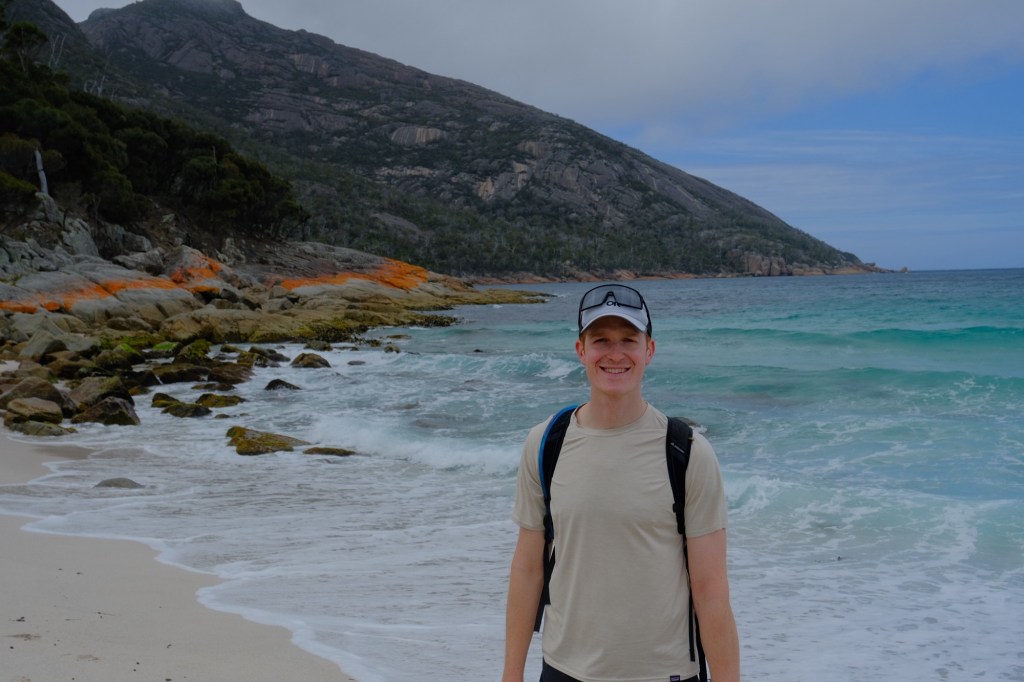
If Cradle is traditionally the gold medalist on the Tassie travel guide, Freycinet is the silver. Freycinet, pronounced Fray-suh-nay, is named after a French boat captain who “explored” Tasmania in the 1800’s. Freycinet is a peninsula on the Eastern side of the island and is a series of granite mountains adjacent to the Tasman Sea. Harriet and I disagreed about the comparison here to US national parks: she thought it resembled the Florida Keys whereas I thought Acadia. Here’s a picture for the one person who’s still reading this post to decide. What we did agree on though was how the park was slightly underwhelming. The trails were cramped and park facilities were a little dated. The park is surely one of the oldest in Tassie and it feels like it. Perhaps if we’d started here and gone to Cradle Mountain after we would have felt differently, but in this case comparison was very much the thief of joy. On the bright side, we had our first wallaby sighting and Harriet’s photography skills got some practice (thanks Stacey for the videos!). It was not a day wasted, but rather a day left wanting more.
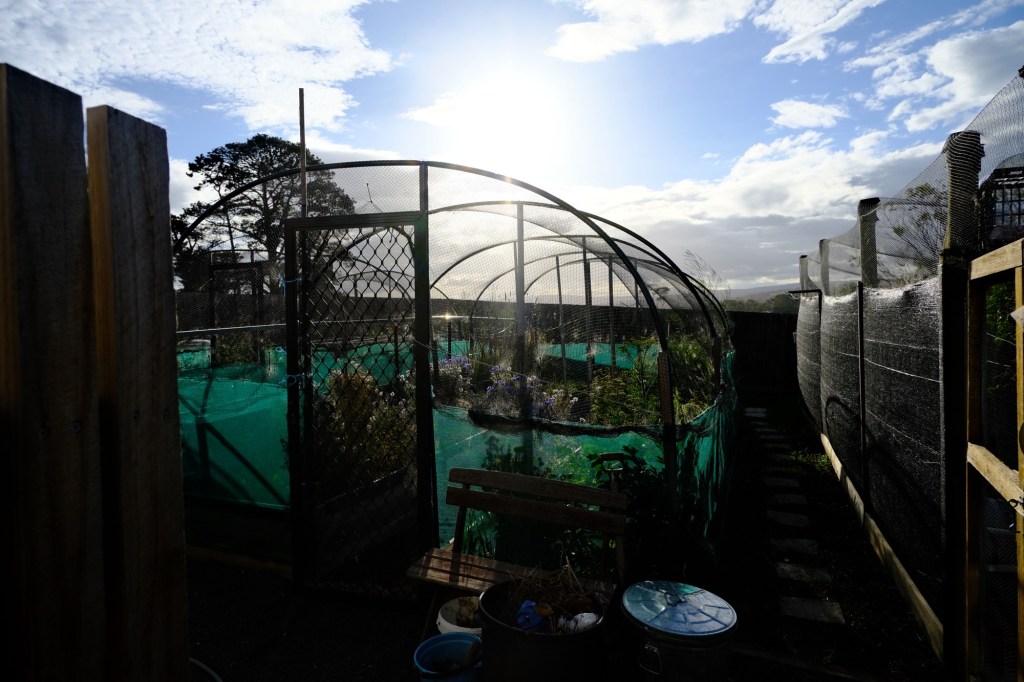
Edit: this day took a delightfully unexpected turn when we arrived to our AirBnB in the seaside town of Swansea. Our AirBnB host, a former Tassie farmer, had a regenerative garden, fully equipped with a chicken coop and water storage containers collecting rainwater off the carport. They offered us fresh eggs, herbs, and tomatoes while showing us how to use their full outdoor kitchen. Both Harriet and I were a bit speechless, but now we have our retirement plans figured out.


Moving Around In Tassie
One of the things that strikes visitors most, myself included, while visiting Tassie is the sheer volume of roadkill. On our two hour journey to Cradle Mountain of roughly 90 miles, I counted 24 incidents. After some deep-dives on the subject, there is no definitive reason why it is so bad in Tasmania, but what most people do agree on is bad roadkill over years is impossible if the animal population isn’t somewhat healthy. This begs the question for most other places in the world: where are all of our furry friends?
On a more positive note, Tasmanians have adjusted to sharing their roads by avoiding driving at night. No seriously, this is the recommendation. Legally, the speed limit is cut in half at night, but in practice it seems most Tassies just don’t drive if it can be avoided. Surely, this is a product of the environment in which they live, but when you’re forced to see the repercussions of your actions on the natural world, maybe you’re slightly more inclined to want to share it.

What’s Next?
We’ve got a few more destinations teed up in Tasmania before headed to the Aussie mainland. Rumour has it there might even be some Kangaroo pics involved.
Till next time,
Andrew and Harriet


 WildIdea
Leave a reply to Alexandra Prior Cancel reply